

The European Green Deal COM (2019) 640 final
Extract of policies, initiatives and communications in the sphere of the EU Green Deal related to construction
.The European Green Deal, launched in 2019, continues to be the central strategy of the European Commission, forming the basis for a wide range of policies aimed at achieving the climate targets of a 50% emissions reduction by 2030 and net zero by 2050. These overarching goals remain in place for the 2025–2030 period. However, the new Commission is placing greater emphasis on the Clean Industrial Deal and maintaining competitiveness, while continuing the Green Deal’s implementation.
The Green Deal sets out the actions needed to transform European society and the economy by 2030 and 2050. While climate change mitigation remains the main focus, the strategy also addresses investment, sustainable growth, other environmental challenges, and complementary strategies such as climate adaptation, research, innovation, and training.
The communication identifies construction as one of the key European industries, incorporating our products within the European industrial strategy and circular economy. Construction is also highlighted in areas such as buildings and renovation. Key initiatives referenced include the Renovation Wave, the Construction Products Regulation (CPR), the Energy Performance of Buildings Directive (EPBD), a potential Building Emission Trade System (Building ETS) and the importance of digitalisation as an enabler of change.
Construction continues to be a vital sector in achieving the Green Deal’s goals, although a more coordinated and efficient overarching strategy is still needed.
At the heart of the Green Deal remains the objective of achieving climate neutrality by 2050. In the construction field, the focus is on reducing environmental impacts, with particular attention to the use phase, and integrating product manufacturing and construction activities into the broader industrial strategy.
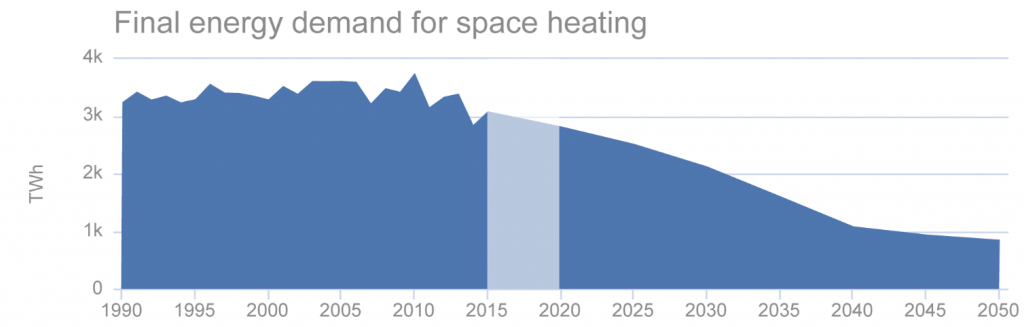
EUCALC estimation
EUCALC estimation for the pathway focused on buildings
The initiative also addresses the wider effects of these ambitious targets, emphasising the protection of the environment and human health, alongside stable economic growth and societal equity.
Metrics continue to be one of the most critical aspects in achieving climate neutrality. Regulatory provisions and incentives must be based on scientifically accepted assessment methodologies. Our industry relies on Life Cycle Assessment and Environmental Product Declarations as the most effective instruments for delivering sustainability information. The Construction Products Regulation (CPR) remains the most appropriate regulatory tool for ensuring both product performance and the functioning of a healthy internal market.
However, product information alone is not enough to identify the best environmental solutions, as design, installation, operation, and end-of-life stages play major roles. In regulatory terms, only the construction products market falls within the direct competence of the European Union; Member States remain responsible for regulating buildings and construction performance. Consequently, European instruments addressing buildings are either voluntary methodologies, such as the Level(s) building assessment framework and the European Construction and Demolition Waste Protocol, or policy instruments to be implemented by Member States, such as the Energy Performance of Buildings Directive (EPBD).